
Imagine that you are living in Victorian times…

You have a typical Victorian garden, where you grow vegetables and fruits, for your family. For the whole year – for 12 months, for few people living in your household.
What type of food is grown in your Victorian garden?
Different fruits, such as: apples, pears and some plums. Also grapes, which are grown in the greenhouses, with the heating boiler located few inches underground. The heating boiler is there to provide the warmth for the grapes, pineapples or other vegetables grown in the greenhouse.
What other vegetables are grown in your Victorian garden?
Lettuce, beans, and carrots are also grown in your Victorian garden. How about tomatoes and cucumbers? – these two are not popular yet in the Victorian times.
What else?
Pineapples (fruits) are cultivated in the Victorian garden, yet it takes a lot of effort to grow them.
 About the gardener
The head gardener working in the Victorian times is earning more money than any other staff member of the household. Why? because his responsibility is greater – he has to produce enough food from the garden for the entire year – for the whole family. Going to the local supermarket to buy food is not common in the Victorian times (like it is today).
The cauliflower license
To grow cauliflowers, the gardener in the Victorian times, needed to have a special ‘ cauliflower licence’. Why? – because not everyone could grow cauliflower in the Victorian times. The cauliflower’s part that is eatable is also the part that produces seeds forming the next cauliflowers, the next season. So, only a licensed cauliflower gardener would know which cauliflowers to leave for seeds products, and which ones to use for kitchen, as eatable cauliflowers.
The father of English garden
 The man known as the Father of English gardens is William Robinson. He was a journalist who lived in the Victorian times in Sussex, England. William Robinson was passionate about gardening and he brought many innovations to English gardens at that time.
He wrote several books and many articles in the papers during Victorian times about gardening. From the money earned from his journals & books, William Robinson purchased a several acres of estate in Sussex, England and started making his own garden and experimenting with it. He believed, for example, that a pear ( fruit) is only good for consumption within 20 minutes of being picked up from the tree. His staff knew that they can interrupt him at any time to provide a fresh pear fruit, that has fallen or was picked up from the tree, for Williamson to eat that pear within the 20 min.
 William Robins’ book published in Victorian times ‘The English Flower Garden’ is considered one of the best books on flowers published in England. Today, it can be found in the second hand book stores, or ordered on line. It’s worth having in your own books collection!
The information in this blog post comes from the gardening lecture I attended this summer in Misterton, Somerset, England. It was a lecture provided by a son of a gardener, who used to work with William Robinson.
Coming soon! – More gardening  tips from Jeff from California, Jeff has his landscaping company in the United States and will share some valuable tips with us, in the next post.
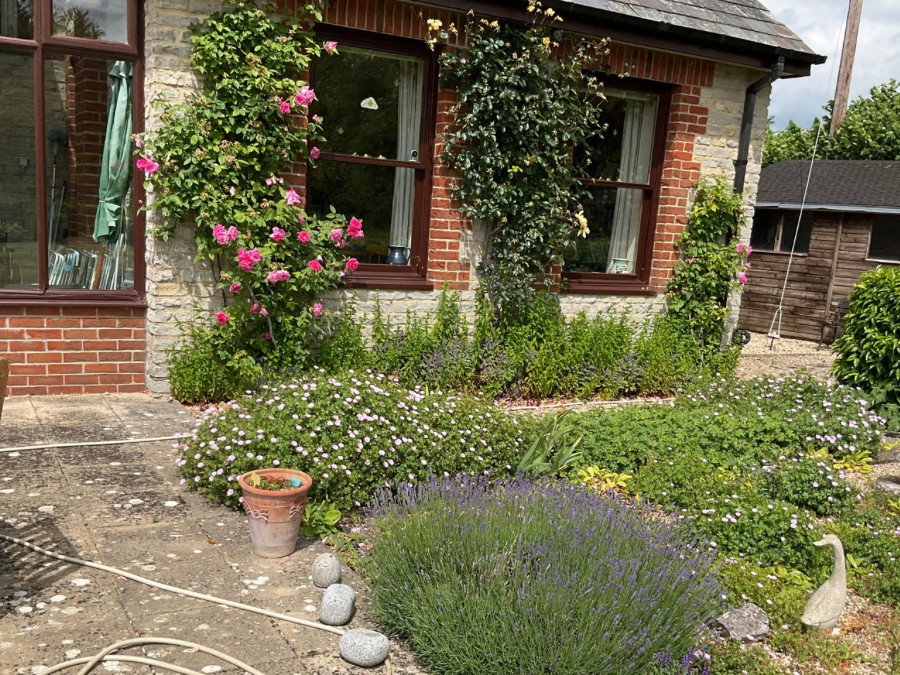
On the photographs here – English modern garden in 2025 in Somerset, England.
Here is a link to a Polish language blog post.
And
Below, a link to aromatherapy ebook, co created with my friend Stephanie Anderson.

hello to the author !
I love what you do and this is so beautiful and very helpful!
And I am very proud to show this to my friends as well!
Thank you Mae! You’re an Artist too, so you understand beautiful things in nature.